
So, you’ve heard about Cyber Essentials, but what’s this “Plus” all about? Think of it as the difference between theory and practice. The Cyber Essentials Plus certification is a government-backed scheme that doesn’t just take your word for it—it puts your security to the test with a hands-on technical audit.
An independent expert actively checks your systems to make sure they stand up to common cyber threats. It’s about moving beyond self-assessment to get verified proof that your security controls actually work.
What Is Cyber Essentials Plus Certification
Let’s stick with a simple analogy. Imagine your business’s cybersecurity is a brand-new car.
The basic Cyber Essentials certificate is like the manufacturer’s brochure. It lists all the impressive safety features – airbags, anti-lock brakes, a reinforced frame. It tells you the car should be safe.
Cyber Essentials Plus certification, on the other hand, is the independent crash test. It’s the practical, real-world verification that proves those airbags deploy correctly and the brakes work under pressure. It’s the ultimate seal of approval.

This certification isn’t some unobtainable standard reserved for massive corporations. It’s a robust, practical benchmark designed specifically to be achievable for UK businesses of all shapes and sizes, especially small and mid-sized organisations. It provides solid, tangible evidence that your digital defences can fend off the vast majority of common online attacks.
Moving Beyond Self-Assessment
The standard Cyber Essentials scheme is based on a self-assessed questionnaire. It’s a fantastic starting point, but it relies on you confirming your own security measures are in place. Cyber Essentials Plus (or CE+) takes this a giant leap forward by bringing in an independent verifier.
A qualified, external auditor gets hands-on with your systems. They perform a series of technical tests to confirm that your controls are not just present, but correctly configured and working as intended.
This audit typically involves:
- External vulnerability scans to identify any weaknesses visible from the internet.
- Internal scans of your computers and mobile devices to check they are securely set up.
- Practical tests of your email and web browser defences to see if they can successfully block malicious files.
Why This Verification Matters
It’s this rigorous, independent validation that gives the “Plus” its value. It changes your cybersecurity stance from a hopeful claim into a proven fact. For any business that handles sensitive data, works with public sector organisations, or simply wants a competitive edge, this level of assurance is fast becoming a must-have.
The real power of Cyber Essentials Plus is the shift from “we think we’re secure” to “we have proven we are secure.” It establishes a clear, verified benchmark of your company’s resilience against genuine cyber attacks.
By achieving CE+ certification, you’re making a serious statement about your commitment to protecting your business, your client data, and your reputation. It shows that your security isn’t just a policy gathering dust in a folder—it’s a living, breathing, and effective reality. Seeing how this fits into a broader strategy is key, and you can explore more about this in our IT managed security services.
Ready to secure your business and achieve certification? Phone 0845 855 0000 today or Send us a message to get started.
Cyber Essentials vs Cyber Essentials Plus
Choosing the right certification level can feel a bit confusing at first, but the distinction is actually quite straightforward.
Think of it like getting your driving licence. The standard Cyber Essentials is your theory test. You learn the rules of the road, study the manual, and answer questions to show you understand what you should be doing to stay safe.
Cyber Essentials Plus, on the other hand, is the practical driving test. An examiner actually gets in the car with you to watch you perform. They check if you can parallel park, handle a busy roundabout, and react correctly in an emergency. It’s the difference between saying you’re a safe driver and proving it.
Self-Assessment vs Hands-On Audit
The standard Cyber Essentials certification is based on a self-assessment. Your organisation completes a detailed questionnaire, confirming that you have the five core technical controls in place. It’s a fantastic first step and a really valuable way to get your basic security ducks in a row.
Cyber Essentials Plus takes this to the next level with a rigorous, independent audit. This isn’t just about ticking boxes. A qualified assessor from an accredited certification body performs hands-on technical tests to see if your controls really work as you’ve described.
This independent verification is what gives the ‘Plus’ its credibility. It turns your security claims into proven facts, giving a much stronger guarantee to your clients, partners, and insurers.
What Does the ‘Plus’ Audit Actually Involve?
The technical audit for Cyber Essentials Plus is designed to mimic the kinds of attacks you’d face in the real world, giving you tangible proof that your defences hold up.
The audit typically covers a few key areas:
- External Vulnerability Scan: The assessor scans your internet-facing systems from the outside, just like a hacker would, looking for any known weak spots that could be exploited.
- Internal Patch Audit: They’ll check a sample of your devices—laptops, desktops, and mobiles—to make sure all your software and operating systems are up-to-date with the latest security patches.
- Malware Protection Checks: Your email and web browser defences are put to the test. The assessor will try to send harmless files that are designed to look like malware to see if your systems block them before a user can open them.
The whole point of the Cyber Essentials Plus audit is to move from trust to verification. It answers the one question that really matters: “Do the security controls we think we have in place actually work when tested?”
This hands-on approach is especially important for devices that often get forgotten. With so many people working remotely, ensuring that company smartphones and tablets are properly secured is non-negotiable. The audit confirms that policies like enforced passcodes and malware protection are working across every device, not just the computers in the office.
To make the differences crystal clear, let’s break them down side-by-side.
Cyber Essentials vs Cyber Essentials Plus At a Glance
The table below gives you a quick overview of how the two certifications stack up against each other.
| Feature | Cyber Essentials (CE) | Cyber Essentials Plus (CE+) |
|---|---|---|
| Assessment Method | Self-assessed questionnaire, verified by a certification body. | Hands-on technical audit performed by an external assessor. |
| Level of Assurance | Demonstrates you understand and have implemented basic controls. | Independently verifies that your controls are working effectively. |
| Technical Testing | None. Based on your submitted answers. | External and internal vulnerability scans, malware defence tests. |
| Credibility | Good. A strong foundation for cyber security. | Excellent. The “gold standard” for proving your security posture. |
| Best For | SMEs, start-ups, or as a first step in a security journey. | Businesses in government supply chains, or those wanting to prove security to clients. |
As you can see, while both are valuable, the ‘Plus’ certification provides a much higher degree of confidence because it’s not just about what you say you do—it’s about what you can prove you do.
Why the Difference Matters for Your Business
The leap from a self-assessment to an independent audit is a big one, and it says a lot about your organisation’s commitment to security.
While the standard Cyber Essentials is a brilliant starting point, achieving Cyber Essentials Plus shows real security maturity. It signals to potential customers—especially those in government, defence, or regulated industries—that you don’t just talk the talk. You’ve had your security independently validated.
In a crowded market, this verified trust can be a massive advantage. It’s the gold standard for any business wanting to not only protect itself but also build a reputation for proven, rock-solid security.
Ultimately, the standard certification helps you learn the rules of cyber security. The ‘Plus’ proves you can follow them when it counts.
Ready to prove your security and achieve certification? Phone 0845 855 0000 today or Send us a message to get started.
Understanding the Five Core Technical Controls
At the very core of both Cyber Essentials and its more advanced counterpart, Cyber Essentials Plus, are five fundamental security controls. These aren’t just abstract concepts; they are the practical, hands-on defences you need to guard against the vast majority of common cyber attacks. Getting to grips with what they mean in the real world is the first step towards a successful certification.
Let’s use an analogy. Think of securing your office building. You’d have strong locks on the doors (Firewalls), a strict policy on who gets a key (User Access Control), a modern alarm system (Malware Protection), a schedule for regular maintenance checks (Patch Management), and a rule that all doors and windows must be properly installed and kept locked (Secure Configuration).
Each of these is crucial on its own. But when you bring them all together, they form a layered, robust security system. The Cyber Essentials Plus audit is designed specifically to test that each of these controls is not just in place, but actually working as it should under pressure.
Boundary Firewalls and Internet Gateways
A firewall is your network’s digital bouncer, standing at the front door and checking the ID of every piece of data trying to get in or out. Its job is to inspect all this traffic, blocking anything that looks suspicious or doesn’t have a legitimate reason to be there. It’s your first line of defence against unwanted intruders.
For instance, a well-configured firewall will only permit traffic required for your business to function. This simple act stops criminals from scanning your network for open, unsecured “doors” they can sneak through. The Cyber Essentials Plus audit includes an external scan to verify that no unnecessary ports are left open to the internet, confirming your digital perimeter is locked down tight. You can explore more about implementing effective network security and firewalls to build this foundational layer.
Secure Configuration
This is all about making sure your computers, servers, and software are set up securely right from the get-go. When you get a new laptop or sign up for a service like Microsoft 365, it often arrives with default settings designed for convenience, not for security. Secure configuration is the process of actively changing these defaults to make your systems much harder to compromise.
In practice, this means:
- Immediately changing all default admin passwords to something long, complex, and unique.
- Removing any pre-installed software (“bloatware”) that isn’t needed for business.
- Disabling features like ‘auto-run’ for USB sticks to prevent malware from launching automatically.
An auditor will physically check a sample of your devices to make sure these secure settings are being applied consistently across the entire business.
User Access Control
The principle here is straightforward: people should only have access to the information and tools they absolutely need to do their jobs. It’s about applying the ‘principle of least privilege’ to limit the potential damage if one person’s account is ever hacked.
An administrator account is like holding the master key to your entire business. If a criminal gets their hands on it, they can access everything. By restricting these powerful accounts to only the essential IT staff who truly need them, you drastically shrink your risk.
During the audit, the assessor will confirm that standard day-to-day user accounts don’t have administrator rights. They’ll also check that you have a solid process for adding new staff and, just as importantly, for removing access the moment someone leaves the company.
Malware Protection
This control is your digital immune system, designed to fight off malicious software like viruses, spyware, and the dreaded ransomware. It’s all about detecting and neutralising these threats before they can take hold and cause chaos.
Putting up a strong defence against malware requires two key things:
- Anti-malware Software: Every single device needs reputable anti-malware software installed, running, and kept up-to-date to scan for and block threats.
- Application Controls: Wherever practical, you should use ‘allow lists’ (or whitelisting) to define which specific applications are permitted to run. This stops almost all unauthorised or malicious programs from ever executing.
The Cyber Essentials Plus audit puts this to the test directly. The assessor will try to send benign test files—designed to act like malware—to your staff via email and through your web browser to confirm your defences spot and block them correctly.
Patch Management
No software is perfect. Developers are constantly finding and fixing security holes, releasing these fixes as updates, or ‘patches’. Patch management is simply the process of making sure these updates are applied quickly and consistently to all your software and devices.
Keeping everything updated is one of the single most effective security habits you can build. The audit includes an internal scan of your devices to check if your operating systems and applications have received the latest security patches. The scheme is strict here: critical updates must be applied within 14 days of release, highlighting just how time-sensitive this process is.
These five controls are the bedrock of a scheme that has become the UK’s standard for cyber hygiene, with over 215,000 certifications awarded to businesses, charities, and schools. Cyber Essentials Plus raises the bar by requiring a hands-on technical audit to prove these controls work, all within a tight three-month window after you pass the initial self-assessment.
Navigating The Cyber Essentials Plus Audit Process
The idea of a Cyber Essentials Plus audit can feel a bit full-on, but it’s really just a structured, step-by-step health check for your cyber security. Think of it less like a scary exam and more like a clear roadmap to take you from security uncertainty to verified protection. Knowing the route from start to finish makes the whole thing feel much more manageable.
Your journey to Plus kicks off right where the basic certification ends. First, you need to have your foundational Cyber Essentials certificate sorted, which is based on self-assessment. Once that’s in the bag, the clock starts ticking: you have a strict three-month window to get the Plus audit done and passed. This tight timeline means you need to be prepared and ready to go.
The Key Stages Of The Audit
The audit is a hands-on, practical test carried out by an accredited expert. They essentially try to find weaknesses in your systems, first from the outside and then from the inside, to make sure your defences hold up.
Here are the main stages you’ll go through:
- Choosing Your Certification Body: The first real step is picking an accredited partner to run the audit. They aren’t all the same; some offer more hands-on support than others, so it’s smart to find one that gets the challenges of a business your size.
- The External Vulnerability Scan: This is where the technical testing begins. The auditor scans your internet-facing services from afar, just like a real attacker would, searching for known security holes or slip-ups in your configuration. It’s all about making sure your digital ‘front door’ is bolted shut.
- The Internal Assessment: Next, the auditor comes inside your network. They’ll test a sample of your devices—laptops, desktops, even mobiles—to check that the five core controls are actually working in practice. This means verifying everything from software patching to your anti-malware setup.
- Real-World Email and Browser Tests: To prove your defences work against common attacks, the assessor sends harmless test files via email and gets staff to visit a special test website. The goal is simple: do your systems spot and block these pretend threats before anyone can click on them?
Who Needs To Be Involved?
Getting through the audit is a team effort, but it doesn’t need to disrupt your whole company. Your IT manager or external IT partner is crucial, as they’ll need to provide technical access and evidence for the auditor. It’s also important to have a senior manager in the loop to oversee the project and sign off the final declaration.
Good communication makes all the difference. Give your staff a heads-up about the audit, especially the email and browser tests, so they don’t panic when they see the test files. For a more detailed look at getting everyone and everything ready, our cyber security audit checklist is a great place to start.
Ultimately, the whole process revolves around the five core technical controls. These are the pillars of the certification.
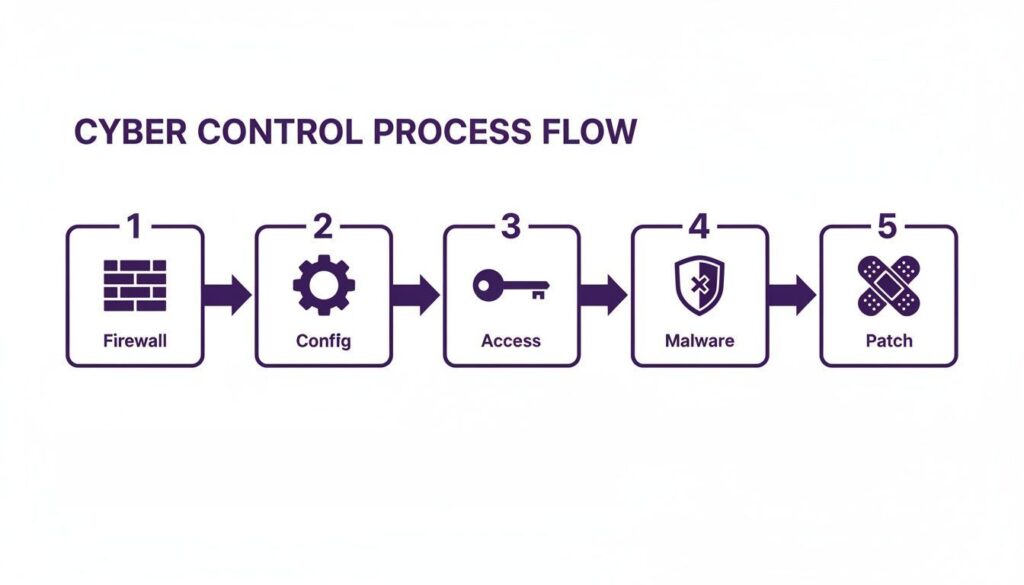
The diagram above shows how these five controls work together, from setting up a strong firewall at the edge of your network to keeping all your systems up-to-date with the latest patches. It’s a holistic approach where each control reinforces the others to build a solid defence.
Evidence and Timelines
Most of the evidence the auditor needs is technical, and they’ll gather it themselves through their scans and tests. You might also be asked to show them documentation for things like your user access policies or your schedule for applying software updates.
By understanding these stages, you can go into the Cyber Essentials Plus audit feeling confident and prepared, knowing exactly what’s coming and how to pass with flying colours.
How Much Does Cyber Essentials Plus Certification Cost?
So, what’s the bottom line? When businesses start looking into Cyber Essentials Plus, cost is usually the first question on their minds. It’s easy to think of it as a single, off-the-shelf price, but that’s rarely the case. The real investment depends on the size of your company and how complex your IT setup is.
Thinking about the total cost helps you budget properly. More importantly, it shifts your perspective from seeing certification as just another expense to viewing it as a vital investment in your company’s long-term health and security. The final figure really boils down to three main parts: the certification fee, the cost of fixing any issues, and the time your own team puts in.
Breaking Down The Costs
The total investment for getting your Cyber Essentials Plus certificate can vary quite a bit, but let’s unpack the typical things that contribute to the final price.
- The Assessor’s Fee: This is what you pay the accredited certification body to carry out the technical audit. It covers their time for running the vulnerability scans, testing your defences against malware, and putting together the final report. This fee can differ from one provider to another.
- Remediation Work: It’s common for the audit to find a few weak spots that need to be shored up before you can pass. This could be anything from rolling out new anti-malware software across your team to finally retiring old, unsupported systems.
- Your Team’s Time: Don’t forget to account for the time your own staff will spend getting everything ready, working with the assessor, and making any necessary changes. It might not be a direct invoice, but it’s a very real cost to the business.
Realistic Cost Brackets For UK Businesses
To give you a clearer picture, here are some realistic cost estimates based on business size. Of course, these are just a guide – your specific IT environment could change the final figure.
The price of achieving Cyber Essentials Plus certification is almost always significantly less than the cost of recovering from a single security breach, a failed contract bid, or the long-term damage to your business’s reputation.
It stands to reason that a small company with a simple setup will pay less than a larger one with multiple offices and a wide variety of devices.
Here’s a rough guide in GBP:
- Micro-Businesses (1-9 employees): For a small team with a straightforward IT system, you should probably budget from £1,500 upwards. This is assuming your current setup is already in decent shape.
- Small to Medium-Sized Businesses (10-249 employees): For a more complex organisation with more people and devices, the total investment, including any fixes, could easily go beyond £5,000.
It’s crucial to frame this as an investment in resilience. The cost of a cyber attack—in lost revenue, fines from regulators, and shattered customer trust—can spiral into tens of thousands of pounds in the blink of an eye. When you look at it that way, the price of having verified, robust protection is a very smart business move.
Ready to understand the investment for your specific business? Phone 0845 855 0000 today or Send us a message for a clear, no-obligation quote.
The Business Case for CE+ Certification
Thinking of Cyber Essentials Plus as just another IT compliance tick-box is a mistake. It’s far more than that. Getting certified is a powerful strategic move, turning what many see as a defensive cost into a genuine asset that fuels business growth.
Achieving this higher-tier accreditation isn’t simply about shoring up your defences; it’s about unlocking serious commercial opportunities and building the kind of trust that wins you business in a crowded market.

Unlocking New Commercial Opportunities
One of the most immediate and tangible benefits of CE+ is getting your foot in the door for lucrative government and public sector work. Plain and simple, many of these contracts mandate Cyber Essentials Plus as a non-negotiable requirement. Without it, your tender won’t even be considered.
Suddenly, a whole new pipeline of revenue becomes available. Holding the certificate means your business can finally bid for work with:
- Central government departments
- The Ministry of Defence (MoD) supply chain
- Local councils and public bodies
- The wider public sector, including the NHS
And it doesn’t stop there. We’re seeing more and more large private sector companies adopt CE+ as a standard for their own supply chains. Achieving the certification makes you a much more attractive and trustworthy partner, setting you head and shoulders above less-prepared competitors.
Building Trust and Winning Customers
In today’s market, digital trust is everything. Your Cyber Essentials Plus certification acts as a powerful seal of approval. It’s independent, verified proof that you don’t just talk about security—you live it. For a potential client weighing you up against a rival, this can be the deciding factor.
The numbers really tell the story. In the year up to March 2024, there were 37,309 basic Cyber Essentials certifications, but only 11,959 for the more stringent Cyber Essentials Plus. That gap highlights a huge opportunity. The ‘Plus’ is a rare badge of honour that proves you’ve gone the extra mile to guard against around 80% of common cyber threats. You can read more about these Cyber Essentials certification trends.
For a small or mid-sized business, Cyber Essentials Plus is more than a certificate; it’s a competitive advantage. It tells your clients, “We don’t just claim to be secure—we’ve had our defences independently tested and proven.”
Reducing Financial and Operational Risk
The security controls you have to prove for CE+ have a direct, positive impact on your bottom line. A genuinely strong security posture massively reduces the chance of a costly data breach—an event that can trigger crippling fines, reputational ruin, and lengthy business disruption.
Insurers have certainly taken notice. Many cyber insurance providers offer lower premiums to businesses with Cyber Essentials Plus certification. Why? Because they see you as a lower risk. You’ve demonstrated a serious, proactive approach to fending off common attacks, and that translates into direct cost savings and a clear return on your investment.
For businesses in specialised fields where data security is non-negotiable, like legal technology, this verified protection is essential. A framework like Cyber Essentials Plus provides a solid security foundation that complements the compliance needs of innovative platforms, including those in AI legal software.
When you look at it this way, the business case is crystal clear. CE+ certification isn’t an IT expense; it’s an investment in your resilience, your reputation, and your revenue.
To turn your security into a strategic asset for growth, phone 0845 855 0000 today or Send us a message to discuss your certification journey.
Let F1Group Guide You Through Certification
Getting Cyber Essentials Plus is a fantastic achievement for any business, but let’s be honest—the process can feel daunting. You don’t have to go it alone. Think of it less as a complex compliance headache and more as a structured project, especially when you have an experienced guide by your side. At F1Group, we become that dedicated partner, clearing the path and walking you through every single step.
We live and breathe the Microsoft ecosystem. Because so many of the scheme’s technical controls involve platforms like Microsoft 365 and Azure, our deep expertise is a huge advantage. We know these systems inside out, which means we can spot and fix security gaps quickly to get you ready for the audit, without any fuss.
A Local, Hands-On Partnership
We’re not just consultants who hand you a report and walk away. Our approach is practical and hands-on, designed to support you from the initial assessment right through to receiving your certificate. Since 1995, we’ve been a trusted local IT partner for businesses across Lincoln, Nottingham, and Leicester, and we’re passionate about helping our fellow East Midlands companies thrive securely.
Here’s what our partnership looks like in practice:
- Full Gap Analysis: First things first, we’ll carry out a detailed review of your current setup against the strict Cyber Essentials Plus requirements. Our job is to find any weak spots before the official auditor does.
- Straightforward Remediation Plan: We’ll then give you a clear, prioritised action plan. No jargon, just a simple explanation of what needs fixing, why it matters, and how we’ll help you get it done.
- Support During the Audit: When the audit day comes, we’re right there with you. We’ll help you gather all the evidence, prepare for the tests, and handle communications with the certification body.
Why F1Group Makes the Difference
Choosing the right partner is half the battle. Our long history of working with businesses across the East Midlands means we get the unique challenges you face. We don’t do “one-size-fits-all” here; our support is built around your specific business and your existing IT.
With F1Group, getting certified isn’t just about ticking boxes to pass a test. It’s about building a genuinely stronger, more resilient security posture that will protect your business long after the certificate is hanging on the wall.
Our goal is simple: to make your journey to certification as smooth and successful as possible. We’ll handle the technical heavy lifting so you can focus on what you do best—running your business—with complete peace of mind. We want to ensure your investment in the cyber essential plus certification delivers real, lasting value.
Ready to start your certification journey with a trusted local expert? Phone 0845 855 0000 today or Send us a message to book your initial chat.