
Legacy system modernisation is all about taking your company’s outdated technology and bringing it up to speed with today’s business needs. It’s far more than a simple IT fix; think of it as a strategic upgrade that sharpens your efficiency, beefs up security, and opens the door to new opportunities that your old systems just can’t handle. For most businesses, this means moving away from clunky on-premise hardware to more flexible, cloud-based solutions like Microsoft Azure.
Understanding The Core of Legacy System Modernisation
Imagine your company’s old IT system is like a classic car. It’s reliable, you know its quirks, and it’s got you this far. But let’s be honest, it costs a fortune to run, lacks modern safety features, and can’t keep up with the traffic on today’s motorways. Legacy system modernisation isn’t just about giving that car a new paint job; it’s about swapping out the old engine for a modern, high-performance one. It’s about turning your technology from a rusty but functional tool into a genuine asset that drives your business forward.
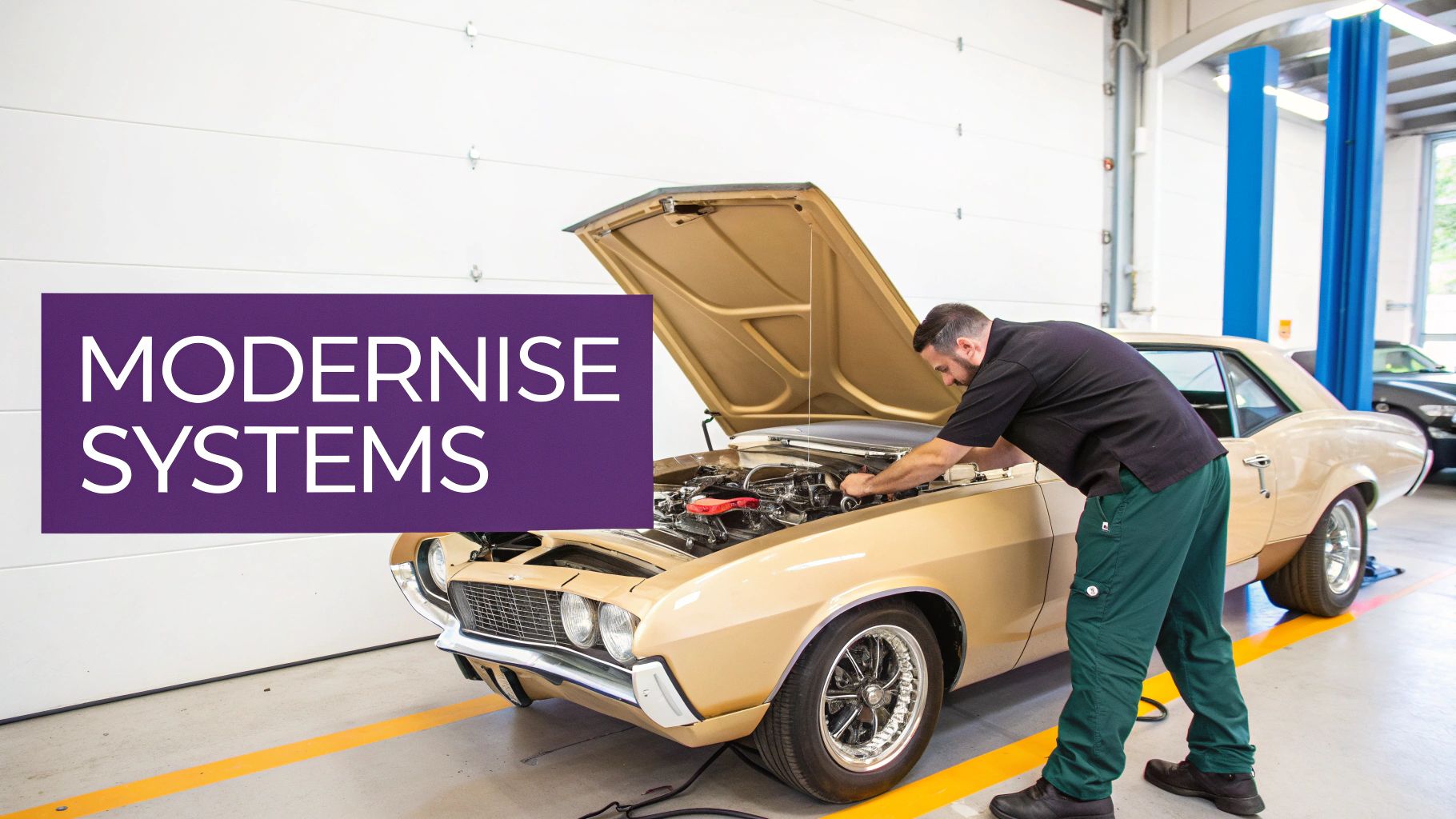
The Importance of Modernising a Legacy System
This process tackles the real-world headaches many organisations are wrestling with. Outdated systems are often a money pit to maintain, a weak link for security threats, and they simply don’t play well with modern tools like Microsoft 365 or advanced analytics platforms. If you don’t modernise, you risk your own technology holding your business back.
Why Modernisation Is a Business Imperative
Sticking with old tech creates a huge amount of friction in your day-to-day operations. You only need to look at the UK government, which spends an incredible £2.3 billion a year—that’s almost 50% of its entire tech budget—just to keep its legacy systems running. This shows just how much these old systems can drain resources, a reality brought home when NHS England recently experienced 123 major system failures that directly impacted patient care.
Modernising your systems is crucial because it allows your business to:
- Boost Efficiency: Swap slow, manual tasks for slick, automated workflows. This frees up your team to focus on work that actually adds value.
- Strengthen Security: Get off unsupported software riddled with known vulnerabilities and move to a secure environment that’s always up to date.
- Enable Agility: Respond faster to market shifts and customer demands with cloud solutions that can scale and adapt with you.
- Unlock Data Insights: Connect your systems to get a single, clear view of your business, which leads to smarter decisions powered by tools like Power BI.
In essence, legacy system modernisation is a conscious decision to stop throwing good money after bad trying to keep old tech alive. Instead, you’re investing in a solid foundation that will support growth and innovation for years to come.
The Strategic Shift in Thinking
Ultimately, this is about moving away from the old “if it ain’t broke, don’t fix it” mentality. It requires a proactive, strategic view of your technology. To really get to grips with the importance of this shift and how it affects your whole company, this Strategic Guide for Enterprise Digitalization is an excellent resource. It helps reframe the discussion from just another costly IT project to a fundamental step in building a more resilient, competitive, and future-ready business.
Start your legacy system modernisation journey and build a more resilient, future-proof business. Phone 0845 855 0000 today or Send us a message.
The True Cost of Inaction
It’s tempting to think that delaying a legacy system upgrade is saving you money. In reality, it’s more like accumulating a debt that silently drags on your entire organisation. This isn’t just about technical glitches; it’s about the very real risks and hidden costs that come with running outdated systems, which ultimately hold back your growth and innovation.

We call this mounting burden technical debt. Every quick fix, every workaround, and every decision to put off an upgrade adds to it. Over time, that debt compounds, making your system increasingly fragile, expensive to look after, and nearly impossible to adapt to new business demands.
The Financial Drain of Legacy Systems
The most immediate and obvious hit is to your finances. Keeping old systems running isn’t cheap; it’s a constant drain on your IT budget that could be much better spent on initiatives that actually move your business forward. And these costs go far beyond a simple software licence.
For starters, legacy systems often demand specialised—and therefore expensive—support. As technology gets older, the pool of experts who truly understand it shrinks, which naturally drives up what they charge. Finding someone who can work on a 20-year-old system is a world away from finding an expert in modern platforms like Microsoft Azure. This talent gap alone creates a significant operational risk.
“Sticking with outdated systems isn’t a neutral choice; it’s an active decision to allocate a growing portion of your budget to maintenance instead of growth. The money spent propping up old tech is money you can’t invest in improving customer experience or gaining a competitive edge.”
This problem is more widespread than you might think. In the UK central government, a staggering 28% of IT systems are now classed as legacy technology. The financial burden is immense, with some departments funnelling 75-80% of their technology budgets just to keep the lights on. It’s a vicious cycle, as maintaining old systems costs three to four times more than modern alternatives, ultimately leading to billions in lost productivity. Learn more about how outdated systems are holding back UK public services.
Operational Bottlenecks and Missed Opportunities
Beyond the direct costs, legacy systems create operational logjams that stop your business from reaching its full potential. They’re often siloed, meaning they don’t talk to your other applications. This makes it impossible to get a clear, unified view of your business, locking you out of powerful tools like Dynamics 365 for customer insights or Power BI for real-time analytics.
Just think about these common scenarios:
- Security Vulnerabilities: An older, unpatched server is like leaving the front door wide open for cyberattacks. The financial and reputational damage from a single data breach can be catastrophic, easily dwarfing the cost of a modernisation project. To fully grasp the risks, see our guide on the Windows Server 2012 end-of-life.
- Compliance Headaches: Outdated software makes it incredibly difficult to comply with modern data protection regulations like GDPR. Non-compliance can lead to eye-watering fines and, just as importantly, destroy the trust your customers have in you.
- Stifled Innovation: You simply can’t build modern, agile processes on a crumbling foundation. Your legacy system becomes an anchor, holding you back from adopting new technologies or responding quickly to changes in the market.
At the end of the day, the true cost of inaction is measured not just in pounds and pence, but in lost opportunities, declining efficiency, and mounting risks. A proactive investment in modernising your systems isn’t just another expense; it’s a critical step towards building a more resilient, secure, and competitive business.
Take the first step towards a modern, efficient future. Phone 0845 855 0000 today or Send us a message to discuss your modernisation needs.
Choosing Your Modernisation Strategy
Taking on a legacy system modernisation project feels a lot like planning a major house renovation. Are you just giving it a fresh coat of paint to improve the look, or do you need a more involved structural remodel to fix deep-seated issues? In some cases, you might realise it’s time to knock it down and rebuild from the ground up.
The right answer always comes down to your specific goals, budget, and just how urgently you need to make a change.
Picking the right strategy is absolutely crucial, as it sets the tone for the entire project. Each path has its own unique mix of benefits, costs, and risks. Getting your head around these different options is the first, most important step towards a transformation that delivers real value to your business without causing unnecessary disruption.
The Four Main Approaches to Modernisation
When we talk about modernising older systems, there are generally four main strategies that everyone in the industry recognises. These are often called the ‘4 Rs’, and they cover everything from making minimal changes to a complete overhaul.
Let’s use a simple analogy to break them down. Imagine your legacy application is an old but reliable company van.
-
Rehosting (Lift and Shift): This is the most straightforward approach. It’s like moving your old van from a leaky, insecure garage (your on-premise server) to a modern, secure, managed facility (the cloud). You don’t actually change the van itself; you just change where it’s parked. This strategy is fast, relatively low-cost, and a brilliant first step into the cloud. You can learn more about the different hosting environments in our guide comparing cloud vs on-premises solutions.
-
Replatforming (Lift and Reshape): This one is a step up. You move the van to the new garage, but you also give it a few upgrades—maybe some new tyres and a better engine management system—to take advantage of its new surroundings. In technical terms, this could mean moving your application to the cloud and switching to a managed database service to boost performance, all without having to rewrite the core application code.
-
Refactoring (Reworking the Engine): This is where things get a bit more involved. You aren’t just moving the van; you’re taking the engine apart to rebuild and optimise it for modern performance. You restructure significant chunks of the application’s code to improve its efficiency, how easy it is to maintain, and its ability to scale, often to make better use of cloud-native features.
-
Replacing (Buying a New Van): This is the most drastic option. You’ve decided the old van is no longer fit for purpose and it’s time to replace it with a brand-new, modern vehicle that meets all your current and future needs. This usually means retiring the old application and either buying a modern off-the-shelf solution (like a SaaS platform) or building a new custom application from scratch.
Choosing the right path isn’t just a technical decision; it’s a strategic one. The best approach aligns with your immediate business needs while paving the way for future growth. A simple ‘lift and shift’ might solve today’s hosting problems, but a full replacement could be the key to unlocking future innovation.
Legacy Modernisation Approaches Compared
To help you decide which path is right for your organisation, it’s helpful to see them all side-by-side. The choice often comes down to balancing cost, speed, risk, and the level of business improvement you’re aiming for.
This table breaks down the key differences to guide your decision.
| Approach | Description | Pros | Cons | Best For |
|---|---|---|---|---|
| Rehosting | Migrating the application to a new infrastructure (e.g., the cloud) with minimal code changes. | Fast, low-cost, low-risk. | Doesn’t fix core application issues; may not leverage cloud benefits. | Businesses needing a quick exit from on-premise data centres or facing hardware end-of-life. |
| Replatforming | Moving the application to the cloud with some minor optimisations to leverage cloud capabilities. | Moderate cost and effort; achieves some cloud benefits without a full rewrite. | Still retains much of the original legacy architecture and limitations. | Organisations that want to improve performance and scalability but aren’t ready for a major overhaul. |
| Refactoring | Restructuring and optimising existing code to improve non-functional attributes. | Improves performance, maintainability, and prepares the app for future features. | Can be complex, time-consuming, and requires deep expertise of the existing codebase. | Strategic applications that are core to the business but are becoming difficult to maintain or scale. |
| Replacing | Decommissioning the legacy application and building or buying a new solution. | Full access to modern capabilities; eliminates all technical debt. | Highest cost, longest timeline, and carries significant project risk. | When the legacy system is a major business constraint and no longer meets essential requirements. |
Each strategy has its place, and the best one for you will depend entirely on your circumstances. For a deeper dive into the different approaches and frameworks for transformation, you might find valuable insights in this guide on Legacy System Modernization Strategies.
Ultimately, the right decision will align your technology with your business vision, ensuring your systems support, rather than hinder, your long-term success.
Ready to discuss which modernisation strategy is the perfect fit for your business? Phone 0845 855 0000 today or Send us a message.
Tapping into the Microsoft Ecosystem for Your Modernisation Project
Once you’ve settled on a modernisation strategy, the next big question is which tools to use. For many UK businesses, the answer lies within the Microsoft ecosystem. It’s not just about picking individual products; it’s about creating a single, integrated environment where everything works together seamlessly.
This approach lets you leave behind the chaos of disjointed legacy apps and move towards a unified platform. From cloud infrastructure with Azure to business management with Dynamics 365, Microsoft gives you all the pieces you need to build a modern, secure, and agile foundation for your business.
Building Your Foundation with Microsoft Azure
For most businesses, the journey starts by moving on-premise servers to Microsoft Azure. The best way to think about it is like swapping your old, self-managed warehouse for a state-of-the-art logistics centre. Azure gives you the elastic, secure, and scalable infrastructure you need to run your operations, but without the constant headache of managing physical hardware.
This move immediately tackles some of the most common pain points of legacy systems:
- Scalability on Demand: Azure lets you dial your computing resources up or down as needed, so you only pay for what you actually use. It’s a world away from the fixed, often-wasted capacity of an on-premise server.
- Serious Security: Microsoft invests billions in security, giving you access to advanced threat protection and compliance certifications that would be incredibly difficult and expensive to achieve on your own.
- Better Reliability: With built-in backup and disaster recovery options, Azure makes sure your critical systems stay online, drastically cutting the risk of costly downtime.
To get this right, you need a plan. A structured migration is key to success. You can learn more about how to approach this by exploring our guide on the Azure Cloud Adoption Framework, which lays out a proven roadmap for a smooth move to the cloud.
Unifying Business Processes with Dynamics 365
Let’s be honest, many legacy systems are just isolated islands of information—especially when it comes to old CRM or ERP software. This makes getting a single, clear picture of your customers or operations practically impossible. Dynamics 365 is designed to fix this, replacing all those separate systems with one integrated suite of intelligent business apps.
Instead of that clunky, on-premise CRM, you get a cloud platform that brings sales, customer service, and marketing data together. This gives your team a true 360-degree view of the customer, paving the way for more personal conversations and smarter decisions. And because it integrates so well with Microsoft 365, your staff can pull up crucial business data right from inside Outlook or Teams, which is a massive productivity booster.
Creating Agile Solutions with the Power Platform
One of the biggest headaches with legacy systems is how rigid they are. Businesses often find themselves stuck with custom-coded applications that are a nightmare to change. This is where the Power Platform (which includes Power Apps and Power Automate) completely changes the game.
The Power Platform opens up development to everyone, not just coders. It allows your team to build custom, agile applications with little to no code. This means you can quickly create solutions to replace old, clunky processes—from digitising paper forms with Power Apps to automating repetitive jobs with Power Automate—without waiting months for a developer to become available.
This low-code approach puts the power back in your hands, making your business far more self-sufficient and quick to adapt. You can build the exact tools you need, when you need them, and connect them straight into your other Microsoft services like Dynamics 365 and SharePoint.
Positioning for the Future with AI and Copilot
The real beauty of modernising within the Microsoft ecosystem is that it sets you up for the next big shift in technology: Artificial Intelligence. Once your data and processes are running on a modern, connected platform, you’re perfectly placed to take advantage of AI tools like Microsoft Copilot.
Copilot can analyse your sales data in Dynamics 365 to suggest new strategies, summarise complex customer service cases, or even draft marketing emails. This isn’t some far-off concept; it’s a practical tool that can make your team more productive today. The catch? It only works if it has access to clean, connected data—something your old legacy systems could never provide.
The financial argument for making this switch is impossible to ignore. Recent figures show that maintaining outdated public sector systems can cause costs to skyrocket, with remediation expenses jumping by as much as 390%. This reflects a broader trend across the UK, where legacy upkeep is eating up 70-85% of IT budgets. By contrast, moving to modern platforms like Microsoft 365 and Azure is a huge opportunity to cut your long-term ownership costs and reinvest that money back into growing your business. Discover more insights about the state of UK digital government here.
By bringing the full Microsoft stack into your business, you’re not just updating your technology. You’re building a strategic asset that will drive efficiency, strengthen security, and fuel real innovation for years to come.
To start your legacy system modernisation journey and build a more resilient, future-proof business, phone 0845 855 0000 today or Send us a message.
Crafting Your Step-by-Step Modernisation Roadmap
Let’s be honest: a legacy modernisation project without a clear, actionable plan is just a recipe for disaster. You can have the best intentions in the world, but without a structured roadmap, projects can quickly spiral out of control, burn through budgets, and ultimately fail to deliver the results you need.
This roadmap isn’t just a technical checklist; it’s a strategic guide that breaks the entire journey into sensible, manageable phases. It’s about moving you from where you are now to where you need to be, step by step.
Phase 1: Define Your Business Outcomes
Before you even think about the technology, you need to answer a simple question: “Why are we doing this?”
Don’t fall into the trap of starting with “we need to move to the cloud.” That’s a solution, not a goal. Instead, start with the business problem you’re trying to solve. For example:
- “We need to cut our customer response times by 20%.”
- “We want to reduce our operational overheads by 15%.”
- “We must be able to launch new services twice as fast.”
These clear, measurable outcomes become your North Star. They keep the project grounded and make it much easier to justify the investment. Every decision you make from here on out should directly support these goals.
Phase 2: Conduct a Thorough System Audit
With your goals firmly in place, it’s time to roll up your sleeves and get a complete picture of your current IT landscape. This is more than just making a list of servers. It’s a deep dive into your applications, data flows, hidden dependencies, and the real-world business processes they support.
Your audit needs to cover:
- Technology Stack: What hardware, software, and operating systems are you actually running?
- Application Dependencies: Which systems talk to each other? What happens if you unplug one?
- Business Criticality: If this component went down, how much would it hurt?
- Pain Points: Where are the biggest bottlenecks, security risks, and maintenance headaches causing you grief?
This detailed inventory is the foundation for everything that follows. It gives you the hard facts you need to decide which modernisation strategy—Rehost, Replatform, or Replace—makes the most sense for each part of your system. More importantly, it helps you avoid those nasty surprises that can derail a project halfway through.
A common pitfall is underestimating the complexity of existing systems. A meticulous audit prevents you from discovering critical interdependencies mid-project, which can cause significant delays and budget overruns.
Phase 3: Develop Your Strategy and Timeline
Now you can start building a realistic plan. A huge part of this is creating a robust data migration strategy. Figuring out how to move years of data from the old system to the new one without losing or corrupting it is one of the most delicate parts of any modernisation project. It requires meticulous planning.
Next, you need a sensible timeline and budget. The key here is to break the project into smaller, manageable milestones. This not only makes it easier to track progress but also allows you to deliver value incrementally. Securing a few early wins is fantastic for building confidence and momentum among your stakeholders. And always, always factor in a contingency for the unexpected—because it will happen.
Finally, get your people involved. Talk to key stakeholders from across the business, from the finance team paying the bills to the end-users who will be working with the new system day in, day out. Their buy-in is absolutely critical. Remember, planning for user training and change management isn’t an afterthought; it’s fundamental to making sure your shiny new system actually gets used.
Ready to create a custom roadmap for your business?
Phone 0845 855 0000 today or Send us a message to start planning your successful legacy system modernisation.
Your Path to a Modern, Agile Business
We’ve walked through why clinging to outdated technology is a risky strategy in today’s fast-moving world. It’s clear that successful legacy system modernisation isn’t just another IT project to tick off a list. It’s a fundamental shift in how your business operates, setting you up for resilience and long-term success. Think of it as moving from simply maintaining the past to actively building your future.
By being smart about how you upgrade your systems—especially with powerful and integrated Microsoft technologies—you can see real gains in efficiency, tighten up your security, and build the flexible foundation you need to grow. The road from initial assessment to a fully implemented new system demands careful planning, but the payoff is huge. It’s about empowering your teams, delighting your customers, and finally opening up those doors to innovation that old tech kept bolted shut.
From Discussion to Decisive Action
Now is the time to turn conversations into concrete plans. You can’t build a modern, agile business on a creaking, outdated foundation. It takes a forward-thinking mindset, one that sees technology not as a cost centre, but as your most important strategic asset. Every day you and your team spend wrestling with legacy systems is another day of missed opportunities and mounting technical debt.
Investing in modernisation is, without a doubt, an investment in your company’s future. It’s what allows you to pivot when the market shifts, use your data to make smarter decisions, and keep your competitors in the rear-view mirror. By making this change, you aren’t just fixing old problems; you’re creating a more competitive, secure, and productive organisation from the ground up.
The journey to a modernised, future-proof business starts with a single step. Our team of experts is here to guide you through every stage, ensuring your investment delivers real, measurable value.
To start your legacy system modernisation journey and unlock the full potential of your IT infrastructure, Phone 0845 855 0000 today or Send us a message.
Your Legacy System Modernisation Questions, Answered
When you’re staring down a legacy modernisation project, it’s only natural to have a few questions. Let’s tackle some of the most common ones we hear from business leaders who are weighing up this kind of vital transformation.
How Long Does a Typical Modernisation Project Take?
This is the classic “how long is a piece of string?” question. The truth is, there’s no single answer because the timeline is tied directly to the project’s complexity and the approach you take.
A straightforward ‘Rehost’—what’s often called a “lift and shift”—might only take a few months. You’re essentially just moving an application to the cloud without major changes. However, if you’re going for a full ‘Replace’ strategy and building a brand-new custom application from scratch, you could easily be looking at a year or more. The key is to start with a thorough assessment to get a realistic picture of the work involved.
What Is the Biggest Risk in a Modernisation Project?
It might surprise you, but the biggest risk isn’t technical; it’s organisational. You can have the slickest technology in the world, but if the project doesn’t have clear business goals, stakeholder communication is poor, or you completely forget about user training, it’s doomed to fail.
So many projects go off the rails because the human element gets overlooked. This is exactly why having an experienced IT partner is so important. They can help you spot and manage these organisational risks from day one, making sure everyone is on board and ready for the shift.
A successful modernisation is 20% technology and 80% communication and strategy. Aligning the project with clear business outcomes and ensuring stakeholder buy-in is the most critical factor for success, far outweighing the technical implementation details.
Can We Modernise in Phases to Minimise Disruption?
Absolutely. In fact, we almost always recommend a phased approach. Trying to overhaul everything at once is a recipe for chaos and disruption.
By modernising one piece of the puzzle at a time, you can manage costs more effectively, reduce the impact on your day-to-day operations, and—crucially—apply what you learn from each phase to the next. This step-by-step strategy delivers quicker wins, builds positive momentum, and makes the whole transition much smoother for your team.
How Do We Justify the Cost of Modernisation to Our Board?
To get the board on side, you need to talk their language. Frame the discussion around business value and return on investment (ROI), not just shiny new technology.
Your business case needs to be built on solid ground. Make sure you cover:
- Reduced Operational Costs: Show them the hard numbers on savings from ditching expensive maintenance contracts, outdated hardware, and constant support calls.
- Improved Efficiency: Quantify how much time and money will be saved by automating manual tasks and giving people tools that actually work properly.
- Lower Security Risks: Explain how modernising closes critical security gaps, protecting the business from the massive financial and reputational hit of a data breach.
- New Opportunities: Paint a picture of what becomes possible with a modern system, like tapping into advanced data analytics or getting new services to market faster.
And here’s the clincher: you must also calculate the cost of inaction. By clearly showing the board the price of doing nothing, you create a powerful argument that makes investing in modernisation a clear strategic imperative.
Ready to get clear answers for your specific modernisation challenges? The expert team at F1Group is here to help guide your journey.
Phone 0845 855 0000 today or Send us a message.