
Choosing the right HR software for your small business in the UK isn't just about ticking boxes. It’s about finding a partner that understands the specific hurdles we face here, from compliance to growth. While platforms like Breathe HR, HiBob, and BambooHR are often in the running, the best fit truly depends on your team's size, your budget, and where you're headed.
Finding the Right HR Software for Your UK Small Business

When you're running a small or medium-sized business in the UK, selecting HR software is a big decision. It’s not about buying the flashiest tool; it's about solving real-world administrative headaches. For most UK SMEs, the biggest challenges are keeping up with HMRC, getting Real Time Information (RTI) submissions right, and managing pension auto-enrolment without a single slip-up.
Get this right, and a powerful platform can transform these compliance minefields into simple, automated workflows.
The UK SME HR Challenge
Small and medium-sized enterprises (SMEs) are the lifeblood of the UK economy. In fact, figures from the Office for National Statistics (ONS) show they make up 99.9% of all businesses and are responsible for employing over half the nation's workforce. Yet, many are navigating HR with outdated, manual methods.
A 2026 Federation of Small Businesses (FSB) survey revealed that a staggering 42% of small firms struggle with HR compliance, often leading to expensive and entirely avoidable mistakes. It’s no surprise that many are now looking for better tools, and you can read more about how UK businesses are adopting HR systems to get ahead. This is exactly where software built for UK regulations stops being a "nice-to-have" and becomes essential.
The goal is to transform HR from a reactive, administrative function into a proactive, strategic asset that supports your business growth.
Top HR Software for UK SMEs at a Glance
To help you get your bearings, we've put together a quick-reference summary of the leading HR software solutions. This table outlines their target business size, key UK-specific features, and typical pricing to help you find the best fit.
Top HR Software for UK SMEs at a Glance
| Software | Best For | Key UK Compliance Feature | Starting Price (GBP per user/month) |
|---|---|---|---|
| Breathe HR | Micro-businesses (under 50 staff) needing core HR & simplicity | Simple RTI-ready reporting & holiday management | From £18 (base fee) |
| HiBob | Growing SMEs (50-500 staff) needing advanced features & analytics | Integrated UK payroll & robust performance management | From ~£6-£10 |
| BambooHR | Businesses prioritising employee experience & global consistency | Strong core HR with UK localisation options | From ~£4-£7 |
While these are all strong contenders, the 'best' choice really boils down to the details. Factors like your existing tech stack, especially if you use Microsoft 365, can make a huge difference. This guide will walk you through the nuances so you can make a decision you feel confident about.
What Every UK HR System Really Needs
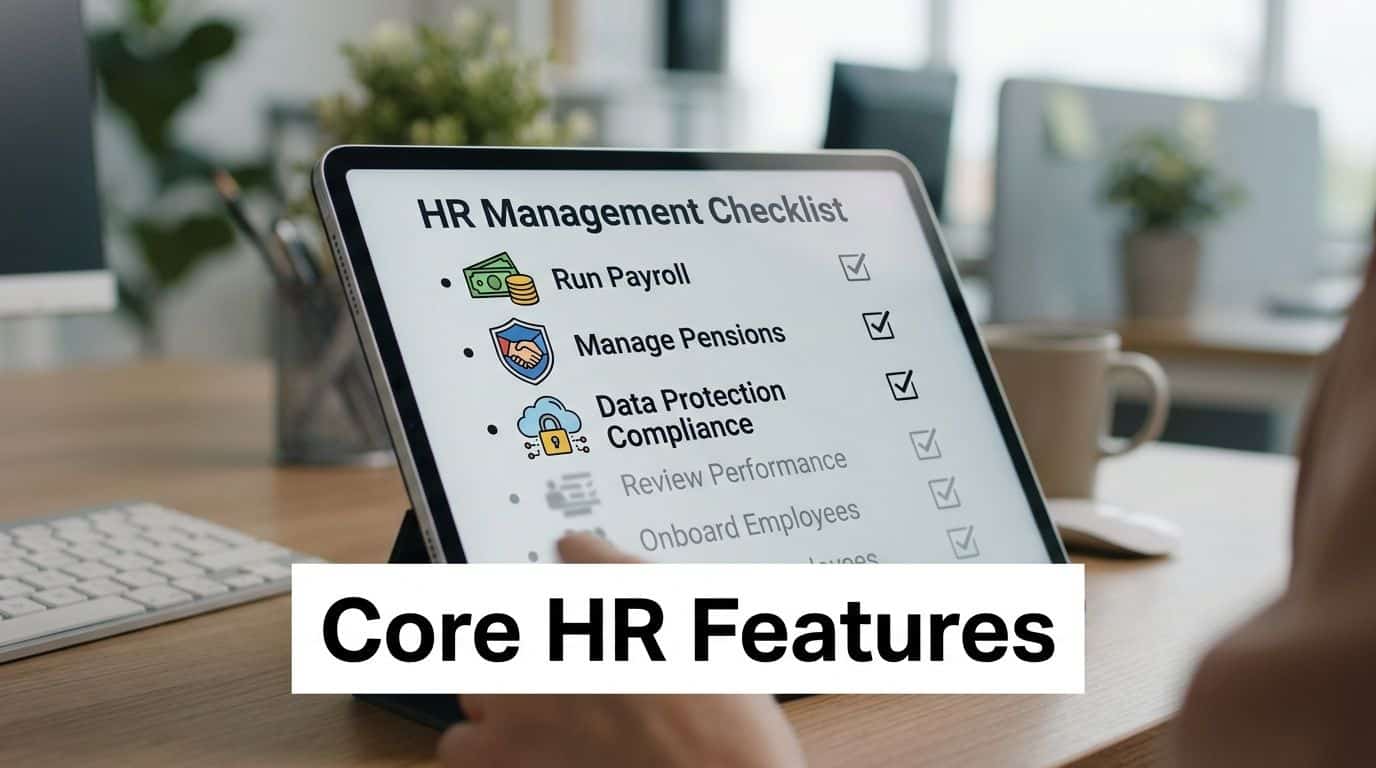
When you're looking for HR software for your small business, it's easy to get distracted by flashy dashboards and long feature lists. But before you get into comparing the nice-to-haves, you have to nail down the essentials. We're talking about the core functions that keep you compliant with UK law and make your daily operations run smoothly.
Getting this right isn't just about saving time; it's about managing risk. The right system acts as your safety net, while the wrong one can quickly become a serious liability.
The Non-Negotiables: UK Compliance and Payroll
Let's be direct: payroll and tax compliance are the most critical parts. This is where HMRC doesn't mess around, and mistakes can be incredibly costly. A good HR platform should take the complexity out of these tasks and automate them as much as possible.
Here’s what you absolutely must look for:
- HMRC-Recognised Payroll: This is the baseline. The software has to be able to correctly calculate tax and National Insurance contributions under PAYE (Pay As You Earn) rules. No exceptions.
- Automated RTI Submissions: Your system should handle Real Time Information (RTI) submissions to HMRC automatically every single time you pay your staff. Trying to do this manually is just asking for errors and potential fines.
- Pension Auto-Enrolment: Managing your workplace pension duties is a huge admin headache. The software should assess who's eligible, calculate the contributions, and talk directly to your pension provider. This automation is a game-changer for a small team.
In my experience, the difference between an okay HR system and a great one is how well it handles payroll and pensions with almost zero manual input. That’s what truly gives you back the time to focus on your people and your business.
The Day-to-Day Essentials: People and Operations
Once you've got the legal must-haves covered, the focus shifts to the features your team will actually use every day. These are the tools that shape the employee experience, so they need to be simple and effective.
Think about it—a clunky holiday booking process is a source of constant low-level frustration. On the other hand, a slick onboarding experience makes new starters feel welcome from day one. If you want to dive deeper into that, our guide on employee onboarding automation is a great place to start.
Make sure your chosen platform includes these key operational features:
- Absence and Holiday Management: Staff need a simple self-service portal to request leave, and managers should be able to approve it with a click. The system needs to track everyone's allowance and flag any potential issues automatically.
- Secure Employee Database: You need a single, central place for all employee information, from contracts and right-to-work documents to emergency contacts. It must be fully compliant with UK GDPR to keep that sensitive data secure.
- Onboarding and Offboarding Workflows: Good software provides checklists and automated workflows to guide you. This ensures nothing gets missed, whether it's setting up a new starter's laptop or calculating final pay for a leaver.
- Performance Management: Look for simple tools to help with performance reviews, setting objectives, and logging one-to-ones. This creates a clear record of development and encourages the kind of regular feedback that keeps people engaged.
Right, let's cut through the marketing noise. Choosing HR software for a UK small business can feel like navigating a minefield, with every provider claiming to be the perfect fit. What you really need to know is how these platforms handle the day-to-day realities of running a business here in the UK.
We’re going to take a hard look at three of the most popular options—HiBob, Breathe HR, and BambooHR—and compare them on the things that actually matter. We're talking about the nitty-gritty of UK payroll, pension auto-enrolment, and what the onboarding experience really feels like for your new starters. Forget generic feature lists; this is about what works in practice.
Getting UK Payroll and Pensions Right
For any UK business, messing up payroll and pensions simply isn't an option. Get it wrong, and you're looking at potential HMRC fines and, just as damaging, a loss of trust from your team. Good HR software should take this entire headache away, ensuring you're compliant without spending hours on manual data entry.
HiBob’s big selling point is its all-in-one approach. It comes with a fully integrated UK payroll system, which means it handles everything—RTI submissions, pension auto-enrolment, the lot—natively. All your employee time tracking and pay data live in one place, which drastically cuts down on the chance of costly mistakes.
Picture a growing 75-person business in Leicester. As they hire more people on variable hours, the complexity skyrockets. For them, HiBob's single source of truth is a lifesaver, making payroll runs faster and far more reliable.
On the other hand, Breathe HR is all about elegant simplicity. It doesn't try to be a payroll processor. Instead, it focuses on doing core HR brilliantly and then integrates smoothly with the payroll software you likely already use, like Sage, Xero, or QuickBooks. Its strength is preparing flawless data—new hire details, holiday records, sick leave—ready to be exported straight into your payroll run.
This is the perfect setup for smaller companies. Imagine a 10-person startup in Lincoln that's already comfortable with Xero. Breathe HR gives them the essential HR tools they're missing without forcing a disruptive and expensive switch from their existing payroll provider.
BambooHR, a major player that started in the US, has made a real effort to localise for the UK. While it doesn't have its own native payroll, it integrates with a wide variety of UK payroll partners. The connection is made via its powerful API, which might require a bit more technical setup compared to Breathe HR's simple export function, but it offers deep integration possibilities.
The Onboarding Experience
You only get one chance to make a first impression, and a clunky onboarding process can sour a new hire's experience from day one. The right software transforms it from a frantic paper-chase into a genuinely welcoming and organised introduction to your company.
- Breathe HR keeps things practical and efficient. Its onboarding checklists and document storage make sure all the administrative and compliance boxes are ticked. It’s a no-fuss approach that gets the job done.
- BambooHR really shines when it comes to creating a brilliant employee experience. You can build custom welcome packs, share intro videos, and use "get to know you" profiles to help new starters feel like part of the team before they even walk through the door.
- HiBob manages to blend both of these worlds. It automates the admin with clever workflows while building a sense of community through social features like team introductions and public shout-outs.
Performance Management and Growth
Modern performance management has moved far beyond the dreaded annual review. Today's tools are about continuous feedback, clear goals, and giving your people a real path for growth.
Breathe HR provides the fundamentals you need to get started, with straightforward tools for logging one-to-ones and tracking objectives. It's ideal for businesses that are just starting to formalise their review process.
BambooHR offers more structure, with excellent templates for performance reviews and clear goal-setting features. It’s consistently rated as one of the best choices for teams under 50, which is why we at F1Group often recommend it to East Midlands SMEs getting started with Microsoft 365. Despite its US origins, it's fully UK-compliant and has seen a huge uptake here, especially as 76% of UK small firms still don't have dedicated HR staff. With plans starting from around £4.50 per user per month, it can make a massive dent in your admin time. For more on this trend, see ADP's recent insights on UK HRIS systems.
HiBob is for businesses that see performance and culture as two sides of the same coin. It offers advanced tools like 360-degree feedback, skills mapping, and career progression frameworks that link individual goals directly to the company's vision. It’s built to drive growth, not just track it.
HR Software Feature Showdown for UK Businesses
To see how these platforms stack up at a glance, we've broken down the key features that matter most to UK businesses. This isn't just a list; it's a guide to help you match the right tool to your company's current size and future ambitions.
| Feature | HiBob | Breathe HR | BambooHR |
|---|---|---|---|
| UK Payroll | Integrated native UK payroll module | Integrates with third-party payroll (e.g., Xero, Sage) | Integrates with third-party payroll partners via API |
| Pension Auto-Enrolment | Fully automated within the platform | Manages employee data for export to pension providers | Manages data for payroll partners to process |
| Onboarding | Automated workflows with strong social engagement | Simple, efficient checklists and document management | Highly customisable with a focus on employee experience |
| Performance Management | Advanced tools: 360-degree feedback, goal alignment | Core features for reviews and objective tracking | Structured goal setting and review templates |
| Integrations | Strong API, especially for systems like Microsoft 365 | Simple, direct integrations with key accounting software | Extensive marketplace of integration partners |
| Ideal Business Size | 50-500 employees (scaling businesses) | Under 50 employees (startups and micro-businesses) | 25-150 employees (businesses focused on culture) |
In the end, there's no single "best" platform—only the one that's best for you. A small, budget-conscious business will find Breathe HR's simplicity and affordability a perfect match. A fast-growing company needing an all-in-one system will get huge value from HiBob's integrated powerhouse. And a business focused on building an amazing culture will love BambooHR's employee-centric tools.
Matching HR Software to Your Business Size
Finding the right HR software for your small business isn't about picking the one with the most features. It's about matching the tool to your company's reality. The platform that works for a five-person startup will almost certainly buckle under the pressure of a 75-person team that’s scaling fast.
Let's look at how this plays out in the real world. We'll walk through three common business sizes, exploring the specific hurdles they face and which software genuinely solves their problems.
Case 1: The Micro-Business (Under 15 Employees)
Picture a small engineering startup in Scunthorpe with 12 employees. The owner is the de facto HR manager, wrestling with spreadsheets to track holidays and chasing paper records for the accountant to run payroll. Compliance is a nagging worry, but the budget is tight, ruling out anything overly complex or expensive.
For a business like this, Breathe HR is often the perfect starting point. Its main draw is its simplicity and affordability, with plans starting from a very manageable monthly fee. The primary needs are straightforward: a central, reliable way to manage holiday requests and sick leave, a secure digital folder for employee contracts, and an easy method for logging expenses.
Breathe’s intuitive, cloud-based system handles these core tasks brilliantly. Staff can request leave from their phones, and the owner can approve it with a click, automatically updating everyone’s allowance. This simple step eliminates spreadsheet chaos and frees up hours of admin time each month, providing a professional HR foundation without overwhelming a small team.
Case 2: The Growing SME (15-100 Employees)
Now, let's consider a marketing agency in Nottingham that has mushroomed from 20 to 60 people. They're hiring regularly, and their basic HR system is straining at the seams. They've moved beyond simple holiday tracking and now need robust performance management, slicker onboarding for new starters, and, critically, an integrated payroll solution.
This is exactly where a more comprehensive platform like HiBob comes into its own. It’s built for companies that are on a growth trajectory and have outgrown the simpler tools. The agency’s biggest pain points—risky manual payroll entry, inconsistent performance reviews, and a disjointed welcome for new hires—are what HiBob is designed to fix.
It offers an all-in-one platform with UK payroll built-in, handling RTI submissions and pension auto-enrolment automatically. Its engaging onboarding workflows and performance management tools create a far more cohesive employee experience. The result? The agency gets a single source of truth for all its people data, slashing payroll errors and administrative overhead. In fact, with pricing from around £6 per user per month and a 98% compliance accuracy rate in benchmarks, it's a clear leader for scaling UK SMEs. You can read more about why it’s a top choice for UK businesses on their blog.
This chart can help you visualise where your business fits and which type of solution to look for.
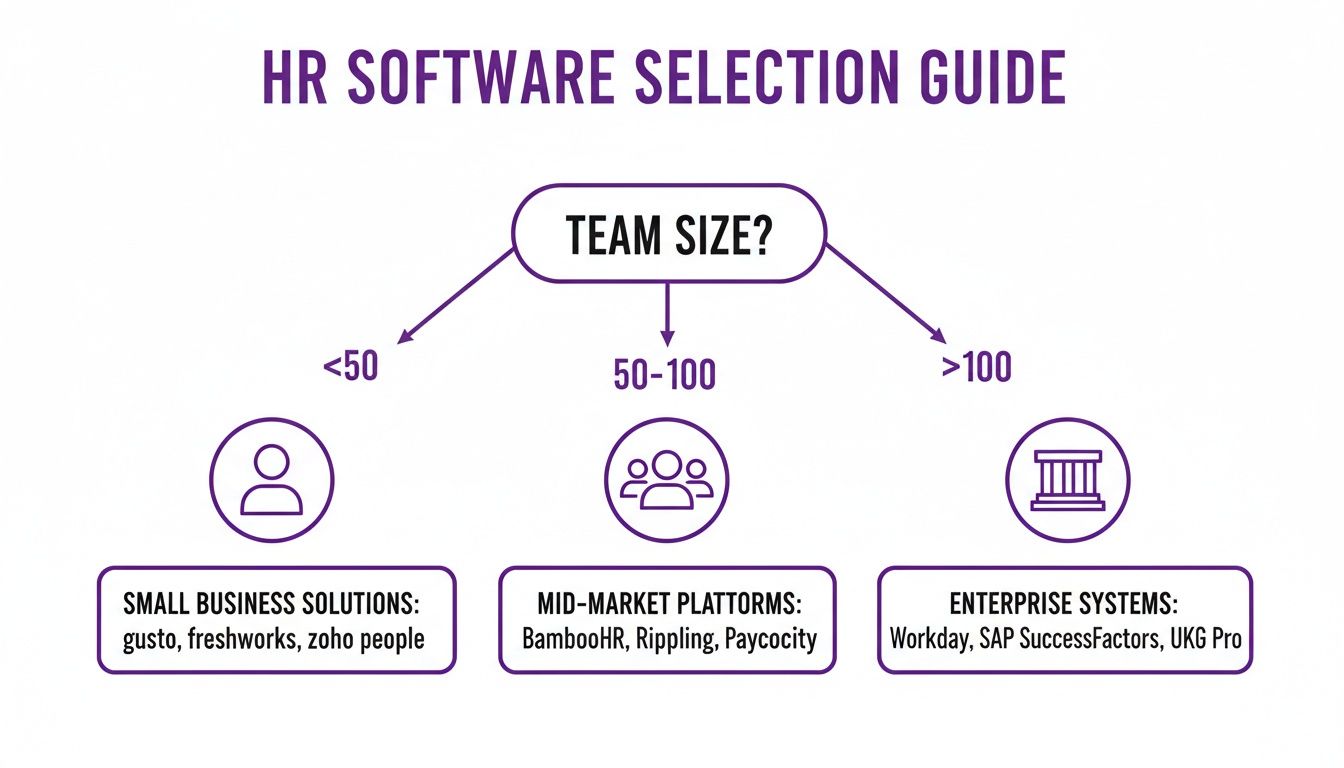
As your company grows, your software needs to evolve with it—from a tool that just manages tasks to a platform that drives strategy.
Case 3: The Established Business (100+ Employees)
Finally, think about an established manufacturing firm in Grimsby with 120 staff. They have a dedicated HR manager and solid processes but are heavily invested in the Microsoft ecosystem. Their top priority is finding an HR system that integrates deeply with their existing Microsoft Dynamics 365 setup to create a truly connected business.
At this stage, the quality of a platform's API and its capacity for customisation become the most important factors in your decision.
Here, a platform's ability to talk to other business-critical systems is non-negotiable. While solutions like HiBob have strong APIs, this is where working with a specialist integration partner like F1Group really pays off. We can bridge the gap between your chosen HR platform and your Dynamics 365 or Power Platform environment.
This unlocks powerful, automated workflows and unified data analytics, giving you insights that you simply can't get when your systems operate in silos. Matching the software to your business size ensures you're only paying for what you need today, but with a clear path for growth tomorrow.
Getting Your New HR System Up and Running
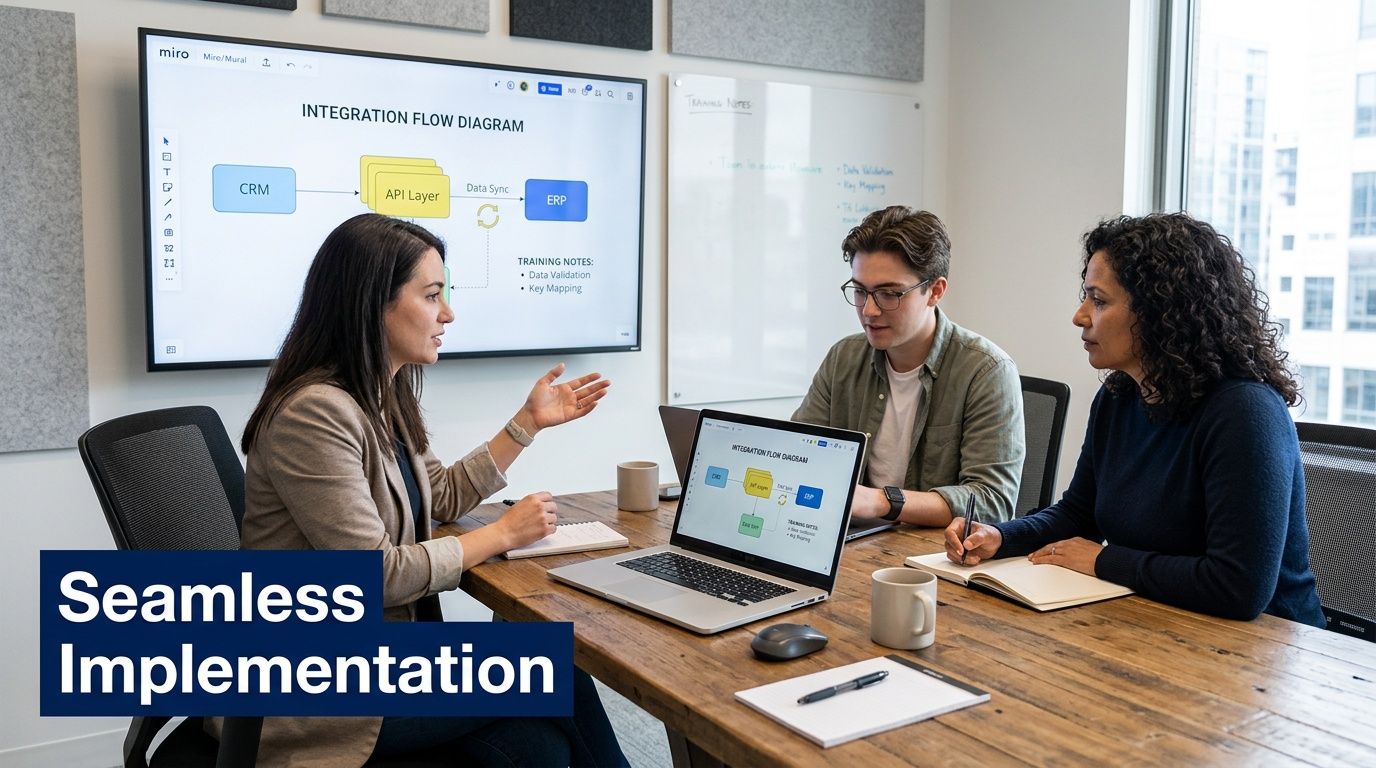
You've picked your new HR software. That's a huge step, but the real work starts now. A successful launch is what turns a software subscription into a genuine asset that improves how you run your business.
Without a solid plan, even the best HR software for a small business in the UK can end up being a frustrating and expensive mistake. It all comes down to careful planning, clear communication, and getting the important details right from the very beginning.
Your Implementation Checklist
The process can feel daunting, but breaking it down into a few key steps makes it far more manageable. A methodical approach ensures you don’t miss anything critical, especially when it comes to UK compliance.
Here’s a practical checklist to guide you through the migration and setup:
- Start with a Data Detox: Before you import a single file, get all your existing employee data from spreadsheets and old systems together. This is your one chance to get it right. Audit everything for accuracy, get rid of duplicates, and make sure it’s all up to date. Good data is the bedrock of a good system.
- Get Your Team On Board: Tell everyone what’s happening and, crucially, why. Explain how the new system will make their lives easier (like booking holidays in a few clicks). Being open from the start reduces resistance and helps people feel involved in the change.
- Lock in Your UK-Specific Settings: This is one area you absolutely cannot afford to get wrong. You must correctly configure your company's PAYE details, pension auto-enrolment information, and holiday year setup. Double-check these settings to stay compliant with HMRC and The Pensions Regulator.
- Roll Out Training in Phases: Don't try to teach everyone everything at once. Start by training managers on things like reporting and approving requests. Then, you can roll out the self-service features to the rest of the team. Tailoring the training makes it stick.
A new HR system’s success isn’t just about its list of features. It’s measured by how well your team adopts it and how smoothly it fits into your everyday work. A good implementation is what turns a piece of software into a real solution.
Make Your HR Software a Strategic Asset with F1Group
If your business runs on Microsoft tools, the right integration strategy can turn your HR platform into something much more than an admin tool. The key is the software's API (Application Programming Interface), which lets it talk to your other essential business systems.
This is exactly what we specialise in at F1Group. Our deep expertise with Microsoft Dynamics 365 and the Power Platform (including Power BI and Power Automate) allows us to build a seamless bridge between your new HR software and the tools you already rely on. If you're curious about the nuts and bolts, our guide to integrating software systems offers a deeper dive.
Connecting your systems opens up some powerful possibilities:
- Smart Automation: Imagine a new hire’s details are added to the HR system, which then automatically triggers the creation of their Microsoft 365 account, allocates their IT equipment, and enrols them in your onboarding process. No manual steps needed.
- Deeper Insights: By feeding HR data into Power BI, we can help you build custom dashboards that combine your people data with financial and operational metrics. This gives you a truly holistic view of business performance.
This kind of integration makes your HR software the data-driven core of a more connected and efficient organisation.
Finding the Right Partner to Make It All Work
As we've seen, picking the best HR software is about finding the right fit for your UK business—one that handles compliance, boosts efficiency, and can grow with you. But getting the software is just the first step. The real challenge, and where you'll see the biggest return, is making that platform a core part of your business.
That’s where we come in. At F1Group, we're not just another IT provider. We're the team that makes your technology actually work together. For businesses across the East Midlands—from Lincoln and Nottingham to Leicester and Grimsby—our job is to make your systems serve you, not the other way around.
From Software to a Smarter Business
Our real expertise is in connecting the dots. We specialise in integrating systems, particularly using the Microsoft technology stack. We can help you connect powerful tools like Dynamics 365 and the Power Platform to your new HR software. This ensures it doesn’t become another isolated program but acts as the central hub for a more organised and effective business.
By building smart workflows and clear analytics dashboards, we turn an administrative tool into something that gives you real strategic insight.
Simply installing new software doesn't change your business. The real value comes from building a connected system where information flows freely, giving you the insights to make better decisions and drive proper growth.
This integrated approach is precisely how a managed IT services firm can offer value that goes far beyond daily IT support, helping you build a more efficient, compliant, and forward-looking company.
Common Questions About UK HR Software
Choosing the right HR software is a big decision, and it’s completely normal to have a few questions. We hear a lot of the same queries from UK small business owners, so we’ve answered the most common ones here to help you get a clearer picture.
Let's dive into the details on cost, compliance, and what it really takes to make the switch.
How Much Should I Expect to Pay for HR Software?
The price tag on HR software can swing quite a bit, depending on what you need it to do and how many people are on your team. For most small businesses in the UK, a good starting point is to budget for somewhere between £4 and £8 per employee, per month.
Your basic plans will usually handle the essentials – things like holiday requests, sickness tracking, and a secure place to keep employee files. If you need more firepower, premium plans add features like integrated payroll, detailed performance management, and advanced reporting.
A word of advice: always ask about one-off setup fees or minimum contract terms. These hidden extras can really affect the total cost, so it’s vital you know exactly what you’re signing up for from the beginning.
Getting the full financial picture upfront means you can find a solution that works for your budget now and as your business grows.
Can HR Software Handle UK-Specific Compliance?
Yes, absolutely. The best HR software for a small business in the UK is built from the ground up to handle our specific rules and regulations. You shouldn't have to settle for a generic global platform and just hope for the best; you need one that understands UK compliance inside and out.
When you're looking, make sure the platform explicitly offers features like:
- Automated RTI submissions sent directly to HMRC.
- Pension auto-enrolment management, which should include eligibility checks and calculating contributions.
- UK GDPR-compliant data storage and security protocols.
Never just assume a big international software provider is automatically compliant with UK law. Always check for yourself during a demo or free trial. Getting this wrong can lead to some very costly mistakes down the road.
Is It Difficult to Switch to a New HR System?
The thought of moving everything over to a new HR system can feel a bit overwhelming, but it's a very manageable process if you plan it out properly. The trick is to be methodical and not to rush things.
At its core, the process involves exporting data from your old system (or your spreadsheets), cleaning it up to make sure it’s accurate, and then importing it into your new software. Getting that data right is the key to a smooth transition with minimal disruption.
Most providers will offer some help to get you started. However, if you want a completely seamless switch, bringing in a specialist can be a game-changer. An IT partner like F1Group can manage the entire migration for you, ensuring your data is handled correctly and the system is set up perfectly from day one. This gives you peace of mind and frees you up to focus on running your business. A recent 2026 UKG report found that 65% of small businesses see a return on investment within just six months thanks to this kind of automation. You can discover more insights about HR software ROI and how it benefits businesses.
Ready to transform your HR processes and build a more connected, strategic business? F1Group specialises in integrating systems to do just that.
Phone 0845 855 0000 today or Send us a message to find out how we can help.